Category: Review

  • The Happy Accident: How Serendipity Shapes Discovery

    The Happy Accident: How Serendipity Shapes Discovery

    By Fr Anselm Adodo, OSB

    This is serendipity: the art of finding something extraordinary while looking for something else entirely.

    The Apple and the Prepared Mind

    The story of Isaac Newton and the falling apple is perhaps the most beloved example. Whether or not an apple literally struck his head, the legend captures something deeply true: Newton was sitting in his garden, not hunched over calculations, not driving an experiment forward, when the simple observation of a falling object cracked open his thinking about gravity and the forces governing the universe. The insight did not come from pushing harder. It came from stillness, from rest, and from an eye that was open and unhurried. The philosopher Louis Pasteur later captured this beautifully when he said that chance favors the prepared mind. Serendipity is not random. It visits those who are paying attention.

    Ten Accidental Miracles in Medicine

    Nowhere is serendipity more dramatic, or more consequential, than in the history of medicine. The treatments that have saved hundreds of millions of lives did not always arrive through grand design. They arrived through accidents observed by curious minds.

    1. Penicillin (1928): Alexander Fleming returned from vacation to find mold contaminating his petri dishes. A less attentive scientist would have discarded them. Instead, Fleming noticed that the mold was killing the surrounding bacteria. That single observant pause gave the world its first antibiotic and transformed the treatment of infectious disease forever.
    2. X-rays (1895): Wilhelm Röntgen was experimenting with cathode rays when he noticed a fluorescent glow appearing on a screen across the room. He had not been looking for a new form of radiation. He found one anyway, and medical imaging was born.
    3. Insulin (1921): Frederick Banting developed his hypothesis after reading a journal article late at night, almost by chance. The experiment that followed saved the lives of millions living with diabetes.
    4. Smallpox vaccine (1796): Edward Jenner noticed that milkmaids who contracted cowpox appeared to be immune to the far deadlier smallpox. An everyday rural observation, easily dismissed, became the foundation of modern vaccination and eventually led to the complete eradication of smallpox.
    5. Aspirin: Willow bark had been used for centuries to relieve pain and fever before scientists isolated the active compound salicylic acid. Nature had always carried the answer. Careful, patient observation finally unlocked it.
    6. Warfarin: Originally developed as a rat poison after livestock mysteriously bled to death from eating spoiled clover, researchers traced the cause and eventually produced one of the most widely prescribed blood thinners in the world.
    7. Lithium for bipolar disorder: John Cade was investigating the toxicity of uric acid when he noticed that lithium salts had a profound calming effect on agitated guinea pigs. That accidental observation permanently changed the landscape of psychiatric treatment.
    8. Viagra: Developed originally as a medication for heart related chest pain, clinical trial participants reported unexpected side effects. Rather than ignoring the data, researchers investigated further, and an entirely new treatment emerged.
    9. Chemotherapy: After World War II, doctors studying the devastating effects of mustard gas on soldiers noticed it selectively destroyed rapidly dividing blood cells. From one of history’s most horrific weapons came a cornerstone of cancer treatment.
    10. Teflon: Roy Plunkett was searching for a new refrigerant gas when he discovered an unusually slippery, heat resistant substance in his equipment. The accidental material later found its way into surgical instruments, medical tubing, and laboratories around the world.

    Observation: The Deepest Scientific Skill

    What connects every one of these stories is not luck in the ordinary sense. It is observation. Fleming did not merely glance at his contaminated dish. He truly looked at it, with curiosity rather than frustration. Jenner did not simply hear gossip about milkmaids. He listened with the ear of a scientist and the eye of someone willing to take an unlikely idea seriously. Röntgen did not walk past the glowing screen. He stopped.

    Observation is not a passive act. It is one of the most demanding and most undervalued skills a human being can develop. It is the skill that unites the scientist and the artist, the naturalist and the nurse. The experienced nurse who notices a subtle shift in a patient’s breathing before any monitor sounds an alarm is practicing the same fundamental discipline as the field biologist who detects a change in animal behaviour before a storm arrives. Both have trained themselves to see not just what is obvious, but what is quietly, insistently there.

    In the natural world, careful observation has yielded astonishing rewards. The entire science of ecology grew from naturalists who sat still long enough to notice patterns. The discovery of how birds navigate by magnetic fields, how plants communicate through underground fungal networks, how whale song carries across ocean basins: all of these began with someone paying close, unhurried attention to the world as it actually is.

    Serendipity in the Story of Your Own Life

    This same principle extends far beyond any laboratory or field station. When we look honestly at our own lives, we often find that the most significant chapters did not begin with a carefully laid plan. They began with an unexpected encounter, a conversation that was never scheduled, a book picked up on impulse, a wrong turn that opened a completely new road. The friendship that became a lifeline. The job offer that arrived just as another door was closing. The quiet moment of grief or exhaustion in which something essential finally became clear.

    We cannot manufacture serendipity. But we can cultivate the conditions that make it possible. We can slow down enough to notice what is actually happening around us. We can resist the pressure to fill every silence with noise and every uncertainty with a premature answer. We can remain curious even when we are tired, open even when we are disappointed, and attentive even when nothing seems to be happening.

    Stay curious. Stay present. The most important discovery you will ever make may arrive on an ordinary afternoon, when you were looking for something else entirely.

    Serendipity is not magic. It is what becomes possible when a prepared mind meets an unexpected moment with open eyes. The history of science tells us this again and again. So, quietly, does the history of our own lives.


  • THE GARDEN WITHIN: HOLISTIC HEALING OF MIND, BODY & SPIRIT.

    THE GARDEN WITHIN: HOLISTIC HEALING OF MIND, BODY & SPIRIT.

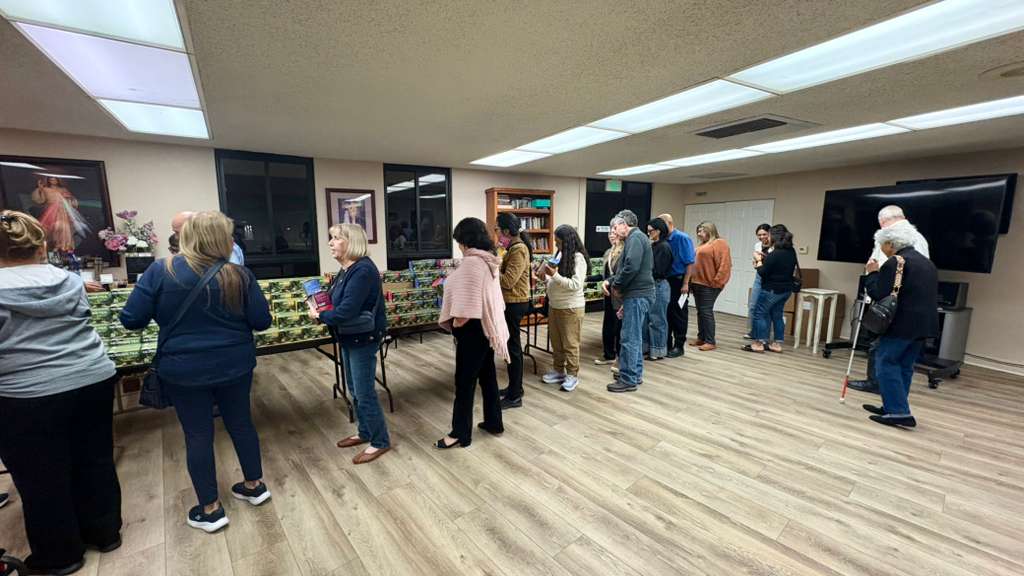
    This month’s edition of the PAX Herbal Newsletter invites you into a deeper reflection on the sacred work of tending the inner life. Inspired by a recent workshop in California led by Fr. Anselm Adodo, OSB, participants were guided into a rediscovery of the profound connection between mind, body, and spirit—a connection that lies at the heart of holistic healing.

    THE GARDEN OF THE HEART: A SYMBOL FOR INNER HEALING

    This metaphor is more than poetic—it is practical. Every garden grows something. The question is not whether seeds are being planted, but which seeds. Thoughts, emotions, and attitudes are the seeds that shape our inner landscape.

    • Do you cultivate gratitude, compassion, and peace?
    • Or do you allow resentment, fear, and negativity to take root?
    • What do you allow to grow in the garden of your mind?

    Just as a gardener removes weeds before they choke the flowers, so must we guard our inner life. Holistic healing begins with this responsibility: to keep watch over the heart, to notice what enters, and to choose what remains. The workshop invited participants to see this inner tending not as a burden but as a sacred act—an offering of love to oneself and to God.

    THE MIND–BODY CONNECTION: A HOLISTIC VISION

    A central theme of the workshop was the inseparable relationship between mind and body. This is a truth long recognized in monastic spirituality, African traditional medicine, and contemporary holistic health practices.

    When the mind is restless, the body responds with tension. When the heart is burdened, the immune system weakens. When the spirit is disconnected, fatigue and disorientation follow. Healing, therefore, must address the whole person.

    The workshop materials emphasized practices that cultivate inner stillness, such as Lectio Divina. The slides describe it as “quiet reflection… training the mind to stay attentive and present instead of wandering to past worries or future plans.” Through slow, prayerful reading of Scripture, the mind learns to rest, the heart becomes receptive, and the body relaxes into a posture of openness.

    Similarly, centering prayer—described in the workshop as “the prayer of silence”—helps quiet the constant impulses of the mind. By choosing a simple sacred word and returning to it gently whenever distractions arise, practitioners learn to rest in God’s presence without striving. The workshop notes explain that this practice frees “your true self to experience more of God’s love in the very core of your being.”

    This inner quiet is not an escape from life. It is the soil in which clarity, peace, and healing can grow. It is the ground from which a healthier, more integrated life emerges.

    THE WISDOM OF ST. HILDEGARD OF BINGEN: A BENEDICTINE GUIDE TO WHOLENESS

    A highlight of the workshop was the introduction of St. Hildegard of Bingen, the Benedictine abbess whose writings continue to shape holistic healing traditions around the world. The slides described her as “a mystic, composer, and polymath whose writings span theology, medicine, and mysticism.”

    Her two major medical works—Physica and Causae et Curae—reflect a deeply integrated understanding of the human person. She believed in healing the whole person through:

    • Herbal remedies
    • Nutrition and diet
    • Emotional balance
    • Harmony with nature
    • Preventative care

    Her approach resonates strongly with the PAX Herbal philosophy and with Fr. Anselm’s lifelong work in African traditional medicine and monastic healing.

    To deepen her significance, it is worth recalling that St. Hildegard of Bingen was officially declared a Doctor of the Church on 7 October 2012 by Pope Benedict XVI, placing her among the very small and remarkable group of four women whose teaching the Church recognizes as universally authoritative. 
    This recognition affirms not only her theological insight but also her holistic vision of human flourishing.

    Hildegard saw the human person as a microcosm of creation—interwoven with nature, animated by divine breath, and capable of radiant vitality when living in harmony with God and the world. Her teachings remind us that healing is not merely the absence of illness but the presence of balance, joy, and spiritual vitality.

    RETURNING TO THE CENTER: A PATHWAY TO WHOLENESS

    The workshop concluded with a gentle invitation to step away from the noise of daily life and rediscover the still point within. One slide captured this beautifully:
    “Stepping aside from the busyness of our daily lives and being still in the presence of God is the key to discovering our true selves.”

    This is the essence of holistic healing:
    a return to the center, where body, mind, and spirit meet in harmony.

    Healing is not something we chase; it is something we allow. It emerges when we slow down, breathe deeply, and listen to the quiet voice within. It grows when we tend the garden of the heart with patience and love.

    A FINAL WORD FOR THIS MONTH

    Tend your inner garden with love.
    Remove the weeds gently.
    Let beauty grow.
    Let peace take root.
    Let God’s presence blossom.

    Until next month,
    PAX HERBAL – Healing the Whole Person

  • From Owerri to New York: A Personal Journey with Paxherbal

    From Owerri to New York: A Personal Journey with Paxherbal

    My name is Matthew Mbanaja, a Fire Protection Engineer based in New York and a member of the American Society of Gas Engineers. My journey with Paxherbal Medicine began long before I ever set foot in the United States. Before immigrating to America in 2016, I was a regular user of Paxherbal products in Nigeria. My introduction came through my friend, Dr. Tony, a state representative of Paxherbals, whose consulting office was located within The Seat of Wisdom Catholic Church on Weatheral Road, Owerri. I was always fascinated by his professionalism: how he combined deep knowledge of natural medicine with the use of modern diagnostic tools, such as a laptop and a stethoscope, to assess his clients’ vital signs.

    As a devout Catholic who once served at Mass as a teenager, I had always associated healing with faith and compassion. Watching Dr Tony work with integrity and care inspired me to learn more. Even though I had no major health concerns beyond the usual malaria and typhoid, I decided to try Paxherbal products for myself. Years later, after relocating to the United States, I went for a comprehensive medical check-up. The results were remarkable: normal blood pressure, normal blood sugar, and a healthy prostate. My physician, an African doctor from Ghana, was impressed and asked what medications I had been using. When I mentioned Paxherbal, he requested that I bring him some samples,  not for laboratory analysis, as I first thought, but for his own personal use. His first request was for Diatea, one of Paxherbal’s signature anti-diabetes herbal formulations.

    The most striking advantage of using Paxherbal medicine, particularly Diatea, is its direct and measurable efficacy. Ever since I started using it regularly, my average blood sugar (A1c) has stayed under 6, and my daily readings are usually between 80 and 90.” As a hands-on field engineer, managing my health naturally is crucial, and I can confidently say that Diatea has made all the difference.

    Taking Metformin was always a challenge for me; it disrupted my routine and caused discomfort. In contrast, my simple Diatea regimen — two sachets in the morning as my regular breakfast tea, and two sachets cold by my bedside at night — keeps my system balanced and effectively controls frequent overnight urination. I have not needed any prescription medication since 2012, thanks to Paxherbal formulations that have kept me healthy, active, and strong.

    Because shipping Paxherbal products to me in the United States was becoming too expensive for Dr Tony, I decided to contact the company directly. Each time my shipment arrived, my friends, both men and women, would eagerly request their share, which I often gave out freely. This growing interest led me to apply to become an official distributor. Today, I am proud to serve as the New York Representative of Paxherbal USA.

    For me, Paxherbals is more than a brand, it represents a philosophy of life rooted in balance, community, and respect for nature. What began as a personal quest for well-being has become a platform for sharing health, hope, and healing with others.

    — M. M. Mbanaja
    New York Representative, Paxherbal USA